





Safety and Compliance: Standards for UPS Power Inverters
- Why regulatory standards matter for electrical power systems
- Protecting people, equipment and continuity of service
- Market access and liability management
- Key international standards and what they require
- IEC/EN standards for UPS systems
- North American standards: UL 1778 and related requirements
- Electromagnetic compatibility and harmonic limits
- Design and engineering best practices for safety and compliance
- Electrical design: protections and topology considerations
- Thermal and mechanical safety
- EMC mitigation and filtering
- Testing, certification pathways and market-specific requirements
- Type testing vs. production verification
- Comparison of major certifications and what they cover
- Regulatory nuances by region
- Choosing suppliers and validating vendor claims
- What to request from a manufacturer
- Factory capabilities and production quality
- Guangzhou Congsin: a compliance-conscious manufacturer
- Practical checklist to get a compliant UPS power inverter to market
- Design phase
- Validation and pre-compliance
- Production and post-market
- FAQ
- 1. What is the difference between a UPS and a standalone inverter?
- 2. Which standard should I follow first when designing a UPS power inverter?
- 3. How do I ensure EMC compliance for my inverter?
- 4. Is CE marking sufficient to sell in the EU?
- 5. How often should I re-test a certified UPS model?
- 6. Can I rely on component certifications to claim product compliance?
- Contact & next steps
UPS power inverter (the inverter section of an uninterruptible power supply) plays a critical role in keeping equipment online during disturbances. Ensuring safety and regulatory compliance requires understanding international standards, electromagnetic compatibility, thermal and electrical protection, and supplier certification. This guide synthesizes authoritative standards and practical design and procurement advice to help engineers, compliance managers and buyers reduce risk and achieve market access.
Why regulatory standards matter for electrical power systems
Protecting people, equipment and continuity of service
UPS power inverter failures can cause fire, electric shock, equipment damage and business interruption. Standards codify minimum requirements for insulation, grounding, thermal management, fault protection and electromagnetic emissions so that devices integrated into buildings, vehicles or medical environments behave predictably under normal and abnormal conditions. Compliance is therefore both a safety imperative and a business requirement.
Market access and liability management
Regulatory approvals (CE marking in the EU, UL/ETL in North America, E-MARK for automotive markets) are prerequisites for legal sale and help manage product liability. Certified units are more easily accepted by system integrators, insurers and OEM customers. Meeting quality-management standards such as ISO 9001 also demonstrates consistent production controls on which compliance depends.
Key international standards and what they require
IEC/EN standards for UPS systems
The IEC 62040 series is the primary international standard family for uninterruptible power systems (UPS). It covers safety requirements, electromagnetic compatibility and performance testing. For example, IEC 62040-1 defines safety requirements for UPS equipment, while other parts address EMC and performance. Referencing and testing to the relevant parts of IEC 62040 is essential when developing a UPS power inverter intended for global markets.
North American standards: UL 1778 and related requirements
In the United States, UL 1778 is the industry-recognized safety standard for uninterruptible power systems and UPS modules. Certification to UL 1778 (or equivalent ETL listing) is commonly required by data centers and enterprise buyers. UL also evaluates construction, fire resistance, overcurrent protection and accessibility for servicing. Official reference: UL 1778.
Electromagnetic compatibility and harmonic limits
Power inverters must meet EMC limits to avoid disturbing nearby equipment (radiated emissions, conducted emissions) and to withstand disturbances. The IEC 61000 series (EMC) is the main reference for immunity and emissions testing. Additionally, IEEE 519 is frequently consulted for harmonic current limits on utility-connected equipment to limit distortion and protect grid stability. See IEEE 519 overview: IEEE 519.
Design and engineering best practices for safety and compliance
Electrical design: protections and topology considerations
Key protections include undervoltage/overvoltage shutdown, overcurrent (fast fuses, electronic current limiting), ground-fault detection and isolation, and safe battery management. Inverter topology (modified sine vs. pure sine) affects harmonic content, filter design and compliance with harmonic standards. Pure sine wave inverters typically offer better performance in sensitive loads and make it easier to meet EMC and harmonic requirements.
Thermal and mechanical safety
Thermal design—heat sinking, airflow, temperature sensors and derating curves—is critical for long-term reliability. Cabinets and enclosures must provide creepage and clearance distances per IEC LVD (Low Voltage Directive) and equivalent national codes. Mechanical robustness and ingress protection ratings (IP codes) should be chosen according to the intended environment (indoor, outdoor, vehicle-mounted).
EMC mitigation and filtering
Meeting emissions and immunity limits typically requires a combination of PCB layout discipline, common-mode chokes, LC/RF filters, and appropriate grounding strategies. Early EMC pre-compliance testing reduces redesign cycles. Refer to IEC 61000-6-2 and IEC 61000-6-3 for generic immunity and emissions standards applicable to industrial and residential environments respectively: IEC 61000 series.
Testing, certification pathways and market-specific requirements
Type testing vs. production verification
Type testing (laboratory testing of representative samples) verifies that a design meets standards. Once the design is certified, manufacturers must maintain production controls and periodically retest. A quality management system such as ISO 9001 helps ensure that production units remain consistent with the tested samples (see ISO 9001).
Comparison of major certifications and what they cover
| Certification / Standard | Scope | Typical Relevance for UPS power inverter |
|---|---|---|
| IEC 62040 (EN 62040) | UPS safety, EMC, performance | Core international spec for UPS designs and performance testing (reference) |
| UL 1778 / ETL | US safety standard for UPS systems | Required/expected for North American markets; focuses on construction and fire/electrical safety (UL) |
| EMC (IEC 61000 series) / FCC | EMC emissions and immunity | Necessary to prevent interference and gain regulatory approval in different regions (IEC, FCC) |
| RoHS / REACH | Restriction of hazardous substances | Environmental compliance required in EU and many markets |
| E-MARK / Automotive standards | Vehicle electrical safety and EMC | Applicable for inverters used in vehicles, RVs and trucks |
Regulatory nuances by region
Each market has nuances: CE marking (EU) requires meeting applicable directives such as the Low Voltage Directive (LVD) and EMC Directive; North America emphasizes UL listing and FCC rules; automotive markets require E‑MARK or UNECE regulations; Brazil, China, India and others may have local certification or registration requirements. Early regulatory mapping will avoid costly redesigns late in development.
Choosing suppliers and validating vendor claims
What to request from a manufacturer
Ask for: test reports (full test certificates) from accredited labs for IEC/EN/UL standards, quality system certificates (ISO 9001), component traceability, EMC pre-compliance reports, thermal testing data, and reliability (MTBF) or accelerated life test (ALT) results. Verify that certification documents reference the exact model numbers being purchased.
Factory capabilities and production quality
Look for automated production lines, controlled assembly environments, and multifunctional test labs on-site. These capabilities lower the risk of variability between certified samples and production units. Independent factory audits and second-party inspections further reduce procurement risk.
Guangzhou Congsin: a compliance-conscious manufacturer
Guangzhou Congsin Electronic Technology Co., Ltd., founded in early 1998, is a professional power inverter manufacturer with over 27 years of focused experience. We design, R&D and manufacture a wide range of power solutions—with a core emphasis on DC→AC power inverters, portable power stations, and solar charge controllers. Our catalog includes 100+ models tailored for vehicles, solar systems, RVs and trucks, off-grid homes, outdoor offices, patrol and field construction work.
We operate fully automated production lines, advanced instrumentation and multifunctional testing equipment to ensure product reliability, efficiency and intelligent functionality. Environmental and safety compliance are built in: our quality system is ISO9001 certified and many products hold international approvals such as CE, EMC, LVD, ETL, FCC, RoHS and E-MARK. Several independently developed patents further demonstrate our commitment to innovation.
Congsin’s products serve global markets across Europe, the Americas, the Middle East, Africa and Southeast Asia; many models are supplied to domestic and international OEM channels. Our support includes OEM/ODM, private labeling, distribution and bespoke customization to meet partner specifications. Our mission is to deliver reliable, efficient and affordable energy solutions that enable energy independence. Key product lines include Solar Charge Controllers, modified sine wave inverters, pure sine wave inverters, and portable power stations.
Choosing a supplier like Congsin means working with a manufacturer that understands regulatory requirements for UPS power inverter components and finished assemblies, and that invests in compliance testing and factory capability to support audit and certification needs.
Practical checklist to get a compliant UPS power inverter to market
Design phase
- Map target markets and list applicable standards (IEC 62040, IEC 61000, UL 1778, EMC/FCC, RoHS, E-MARK).
- Choose inverter topology and components with known compliance histories (e.g., capacitors, MOSFETs/IGBTs with relevant ratings).
- Perform safety hazard analysis (e.g., FMEA) and thermal modeling early.
Validation and pre-compliance
- Run EMC pre-compliance tests, thermal cycling and overload tests in development labs.
- Arrange for accredited lab type testing and collect full test reports and certificates.
Production and post-market
- Implement product traceability, lot testing, and in-line functional tests.
- Maintain records to support audits and customer inquiries; plan for periodic re-testing when there are component or process changes.
FAQ
1. What is the difference between a UPS and a standalone inverter?
A UPS (uninterruptible power supply) integrates batteries, an inverter and control electronics to provide seamless power during outages, often with features like surge protection and automatic transfer. A standalone inverter converts DC to AC but may lack automatic transfer switches, battery management and the rapid switchover behavior required for sensitive loads.
2. Which standard should I follow first when designing a UPS power inverter?
Start with IEC 62040 for UPS-specific safety and performance requirements, combined with IEC 61000 for EMC. For North American markets add UL 1778 and any local electrical code requirements. Early alignment avoids redesign costs.
3. How do I ensure EMC compliance for my inverter?
Implement PCB layout best practices, use filters (common-mode chokes, Y/X capacitors), shield enclosures where necessary, and perform EMC pre-compliance testing during development. Consult IEC 61000 series and regional rules such as FCC for emitted interference limits.
4. Is CE marking sufficient to sell in the EU?
CE marking indicates conformity with applicable EU directives (e.g., EMC Directive, Low Voltage Directive). You must identify which directives apply, prepare technical documentation, and sign a Declaration of Conformity. Third-party testing is required for some directives or product types.
5. How often should I re-test a certified UPS model?
Re-testing is recommended whenever there are significant design or component changes. Some buyers and markets also require periodic re-certification or sampling verification. Maintain change-control and risk-assessment processes to determine when retesting is necessary.
6. Can I rely on component certifications to claim product compliance?
Component certifications help, but full-system behavior (EMC, thermal, safety under fault conditions) depends on integration. Always validate at the system level with type tests and full documentation.
Contact & next steps
If you need help mapping standards for a specific market, reviewing technical files or selecting certified inverter models, contact Guangzhou Congsin Electronic Technology Co., Ltd. for OEM/ODM options, product catalogs and testing support. Visit our product pages or request a quote to evaluate pure sine wave inverters, modified sine wave inverter, portable power stations and solar charge controllers. For inquiries and technical consultations, request certification documents and factory capabilities to verify compliance and production quality.
12V vs 24V vs 48V: Picking the Right Vehicle Inverter

Car Battery Inverter: The Ultimate Guide (2026 Edition)
Safety and Certification Standards for Car Inverters
Battery Compatibility with Pure Sine Wave Car Inverters
Modified Sine Wave Inverters
What is the benefit of the UPS function? A2:
It automatically switches to battery power when AC fails.
How does reverse protection work?
When the positive and negative poles of the battery are reversed, the inverter will automatically cut off the circuit to avoid device damage and ensure power usage safety.
Pure Sine Wave Inverters
What capacity battery is needed to drive a 1000W electric kettle?
It is recommended to match with a 12V 100Ah or larger capacity battery. When a 1000W electric kettle is working, the power consumption per hour is about 83Ah (1000W÷12V≈83A), and a 100Ah battery can support continuous work for about 1 hour (actual battery life is affected by battery aging).
What is the reason for the inverter automatically shutting down during operation?
It is likely that the protection mechanism is triggered: 1. Load overload (total power of connected devices exceeds 1000W); 2. Abnormal input voltage (battery voltage <10.8V or >14.5V); 3. Device overtemperature (excessively high ambient temperature or cooling fan failure). It is recommended to disconnect some loads, check the battery voltage or clean the heat dissipation port before trying again.
Can this inverter drive a 3P air conditioner and a refrigerator at the same time?
Yes. The rated power of a 3P air conditioner is about 2200W-2500W, and an ordinary double-door refrigerator is about 150W-300W, with a total power of about 2350W-2800W, which does not exceed the 3000W continuous power; and the peak 6000W can cope with the instantaneous startup impact of the air conditioner. When using, ensure the battery capacity is ≥200Ah (12V) to ensure battery life.
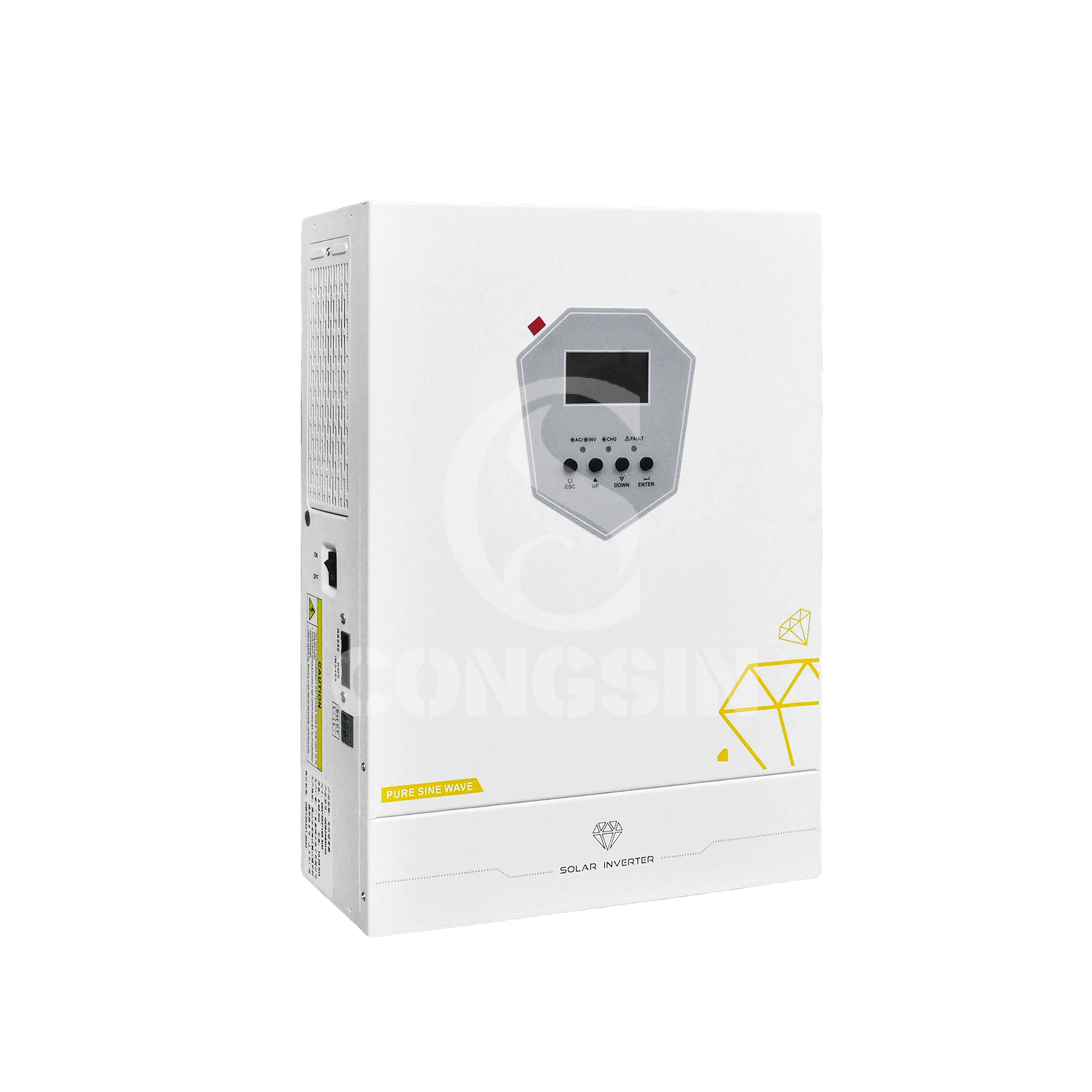
Factory Direct Sales 6000W Hybrid Solar Power Inverter with Controller and LCD Display
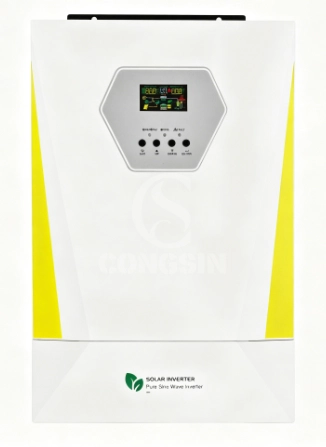
Congsin 4000W and 6000W Hybrid Inverter with Controller with LCD Display and CE Certification Solar
Power your solar system efficiently with the Congsin 4000W and 6000W Hybrid Inverter. Featuring an integrated MPPT Controller, this CE Certified inverter ensures optimal energy conversion. Monitor performance effortlessly via the intuitive LCD Display. Reliable, powerful, and ready for your sustainable energy needs.
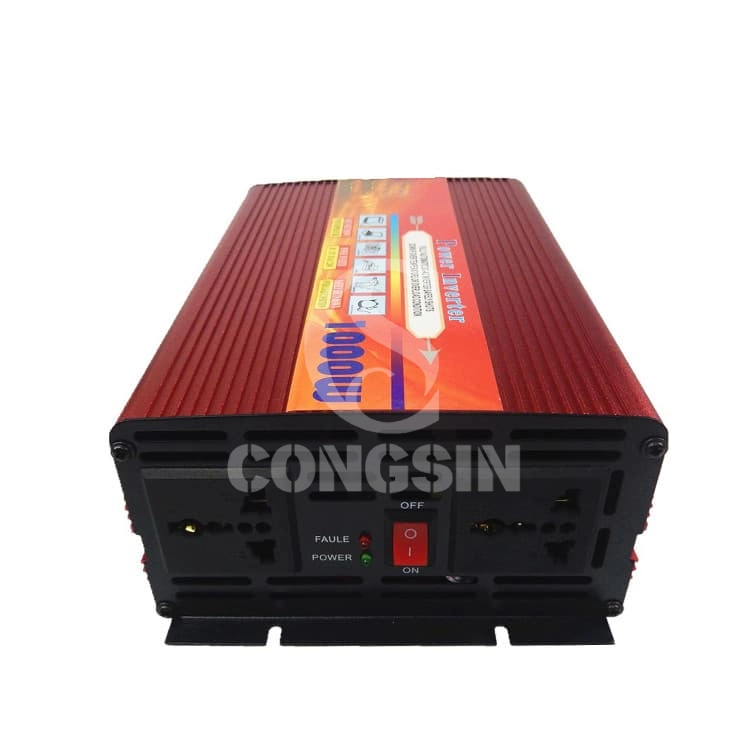
Congsin Manufacturer Wholesales Big Capability Modified Sine Wave Inverter with Red case and Double fan
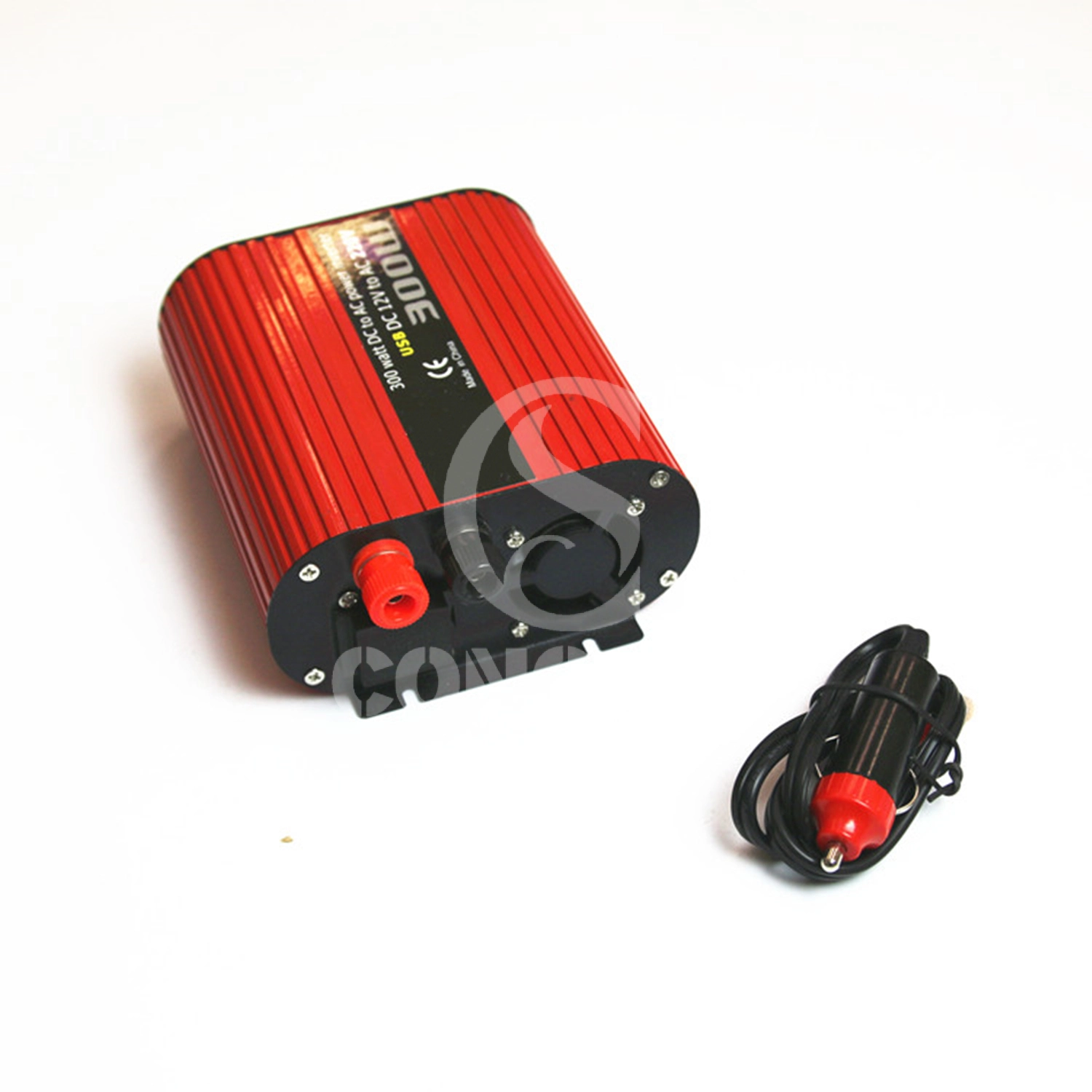
Factory Direct Sales Portable 150W Modified Sine Wave Inverter DC12V to AC220V Off-grid Sine Wave Inverter with Two USB and Universal Socket
Congsin's Portable 150W Modified Sine Wave Inverter powers your journey! This versatile Car Power Inverter with USB acts as a reliable 12V to 220V converter, ensuring an essential off-grid power supply. With dual USB ports and a universal socket, enjoy convenient power on the go.

CONGSIN is a trusted OEM factory for power inverters, solar charge controllers, and DC converters. Reliable solutions for global B2B buyers.
 High Quality
 7/24 Service
 Guaranteed Warranty
© 2025 Congsin. All Rights Reserved.
 WeChat
 Scan QR Code
sin cong
teaimei10
Whatsapp: +8618028086791
Scan QR Code